Tools & Resources

Auxiliary Boiler versus Combined Heat & Power (CHP) Plant

  • Educational
  • TechnoEconomics
  • Innovation
4 Min Read Mar 24, 2026

Capturing CO2 from industrial emissions is an energy intensive process and capture plants require a lot of heat and/or power to operate. These higher energy requirements have a direct impact on operating costs, which can significantly increase the cost of capture.

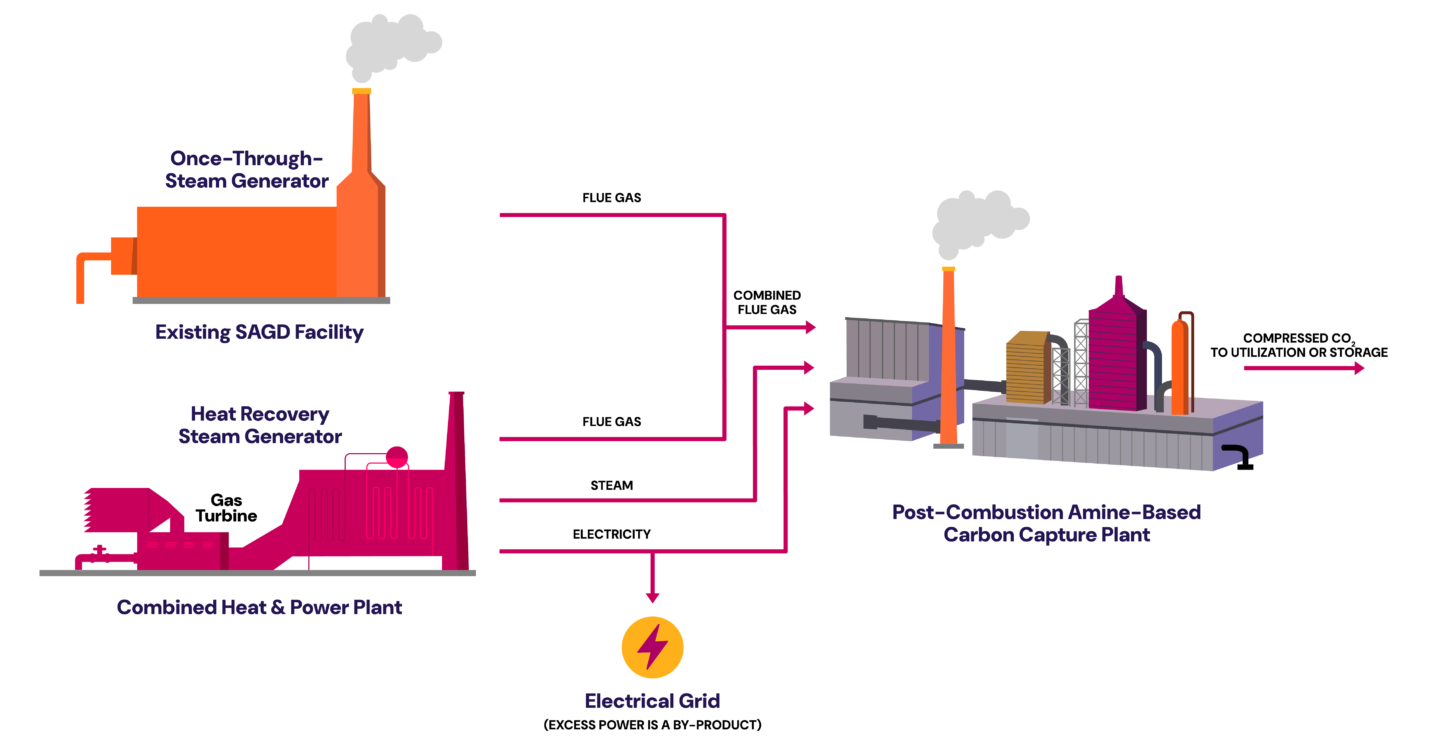
For amine-based carbon capture plants, steam is used to heat the amine solution, releasing the captured CO2 and regenerating the solvent for re-use, and electric power is used to operate fans, pumps, compressors, and other equipment. Although there are scenarios where both steam and electricity can be sourced from the host facility, this evaluation focuses on scenarios where an additional system provides the necessary heat and power for the capture plant, specifically an auxiliary boiler or a combined heat and power (CHP) plant.

Below, we break down the key insights for each of these systems, and how they influence the overall economics of a carbon capture project.

What are Auxiliary Boilers and CHP Plants?

Auxiliary boilers and CHP plants are two different systems that can supply steam and/or power to the capture plant:

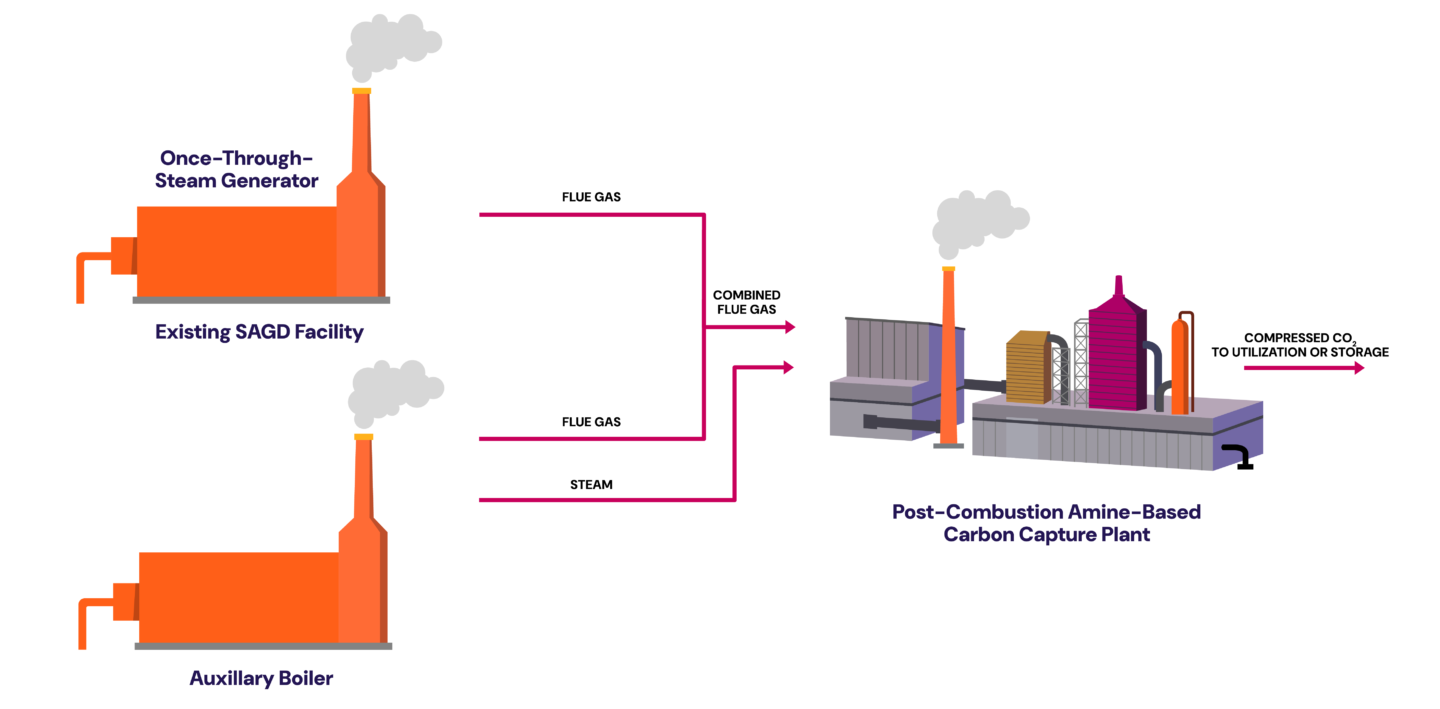
  • Auxiliary boiler: This system consists of a dedicated natural gas-fired boiler that generates steam for the capture process (e.g., solvent regeneration). Electricity for the capture plant is purchased from external sources (i.e., grid purchases or a Power Purchase Agreement), making this option a pure cost for the project.
  • CHP plant: This system consists of a gas turbine and heat recovery steam generator (HRSG). The gas turbine drives a generator to produce electricity for the capture plant, while the HRSG supplies steam for the capture process. Any excess electricity produced by the CHP plant can be sold to the grid, creating a revenue stream for the project.

Model Assumptions

To understand how project economics are impacted by each system, we simulated a post-combustion amine-based carbon capture plant on a theoretical Steam-Assisted Gravity Drainage (SAGD) facility. The SAGD facility is assumed to generate 1 million tonnes of CO2 per year. The scenarios include:

1. Auxiliary boiler

A natural-gas fired auxiliary boiler supplies steam to the capture plant, while all electricity is purchased from the grid. The capture plant was designed to capture CO2 emissions from both the existing SAGD facility and the auxiliary boiler.

2. CHP plant

A CHP plant supplies both steam and electricity to the capture plant. The capture plant was designed to capture CO2 emissions from both the SAGD facility and the CHP plant. Any excess power generated by the CHP plant is sold to the grid. To assess the impact of integrated steam and power generation, three CHP plant scenarios were evaluated. These plant capabilities were selected because their standard turbines are large enough to supply both heat and power, without being oversized:

(a) A CHP plant capable of producing 90 MW
(b) A CHP plant capable of producing 117 MW
(c) A CHP plant capable of producing 201 MW

An electric CO2 compressor was assumed all scenarios. Click here to learn more about the study’s methodology and assumptions.

Results

Select from the following key insights to explore the differences between an auxiliary boiler and various sizes of CHP plants integrated with a post-combustion amine-based carbon capture technology:

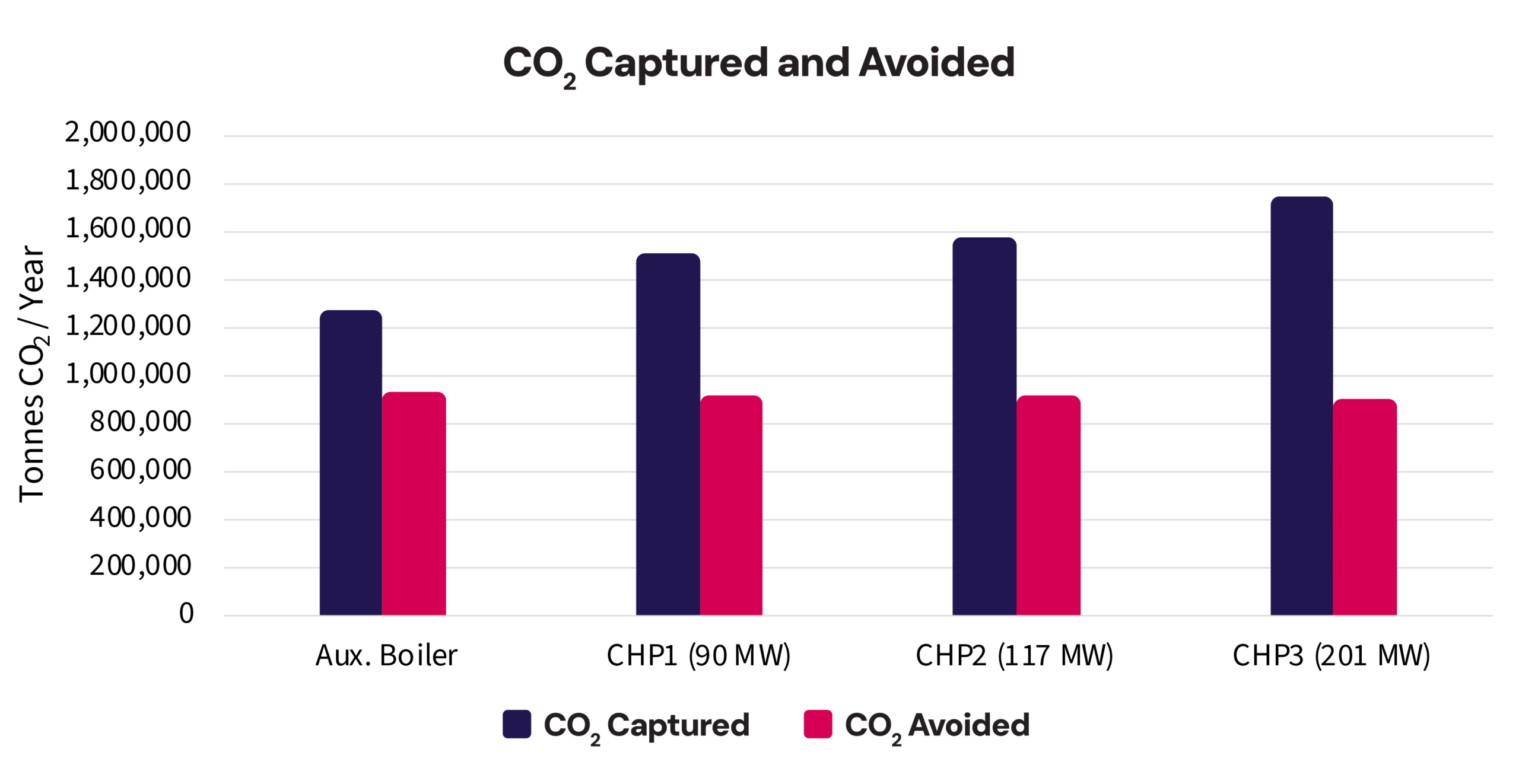
CO2 Captured and Avoided

Note: This graphic reflects Scope 1 emissions only.

Key Insights:

  • CO2 Avoided (Emissions Reduction): While all scenarios significantly reduced CO2 emissions, the auxiliary boiler achieved a slightly higher emissions reduction. The CHP plant scenarios don’t reduce as many emissions because additional natural gas combustion is required to generate electricity, which introduces additional CO2 emissions. Although the flue gas from the CHP plant is routed to the capture plant, a 95% capture efficiency means that 5% of CO2 emissions remain uncaptured, contributing to lower overall emissions reduction in the CHP plant scenarios.
  • CO2 Captured: The CHP3 plant configuration captured 36% more CO2 than the auxiliary boiler scenario. This is because the CHP3 plant burns more natural gas to generate electricity, producing a larger flue gas stream. With more flue gas being routed to the capture plant, more CO2 is captured.
Capital Expenditure (CapEx)

Key Insights:

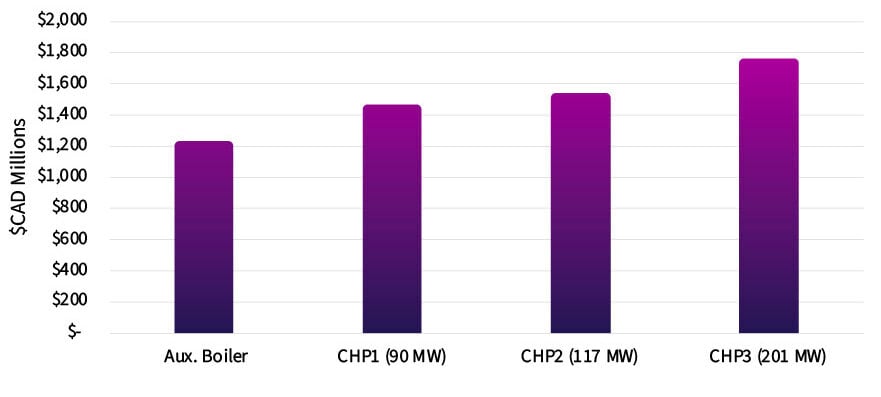
  • Higher capital required for CHP plants: CHP plants require a higher capital investment than the auxiliary boiler. This is due to the need for a large gas turbine, the addition of HRSG, and a larger capture plant capable of processing the increased flue gas volumes produced by CHP plants.
  • Capital costs increase with CHP plant size: As the CHP plant capacity increases from CHP1 to CHP3, equipment size and capture plant size also increase, resulting in higher capital costs.

Operating Expenses (OpEx) and Revenue

Key Insights:

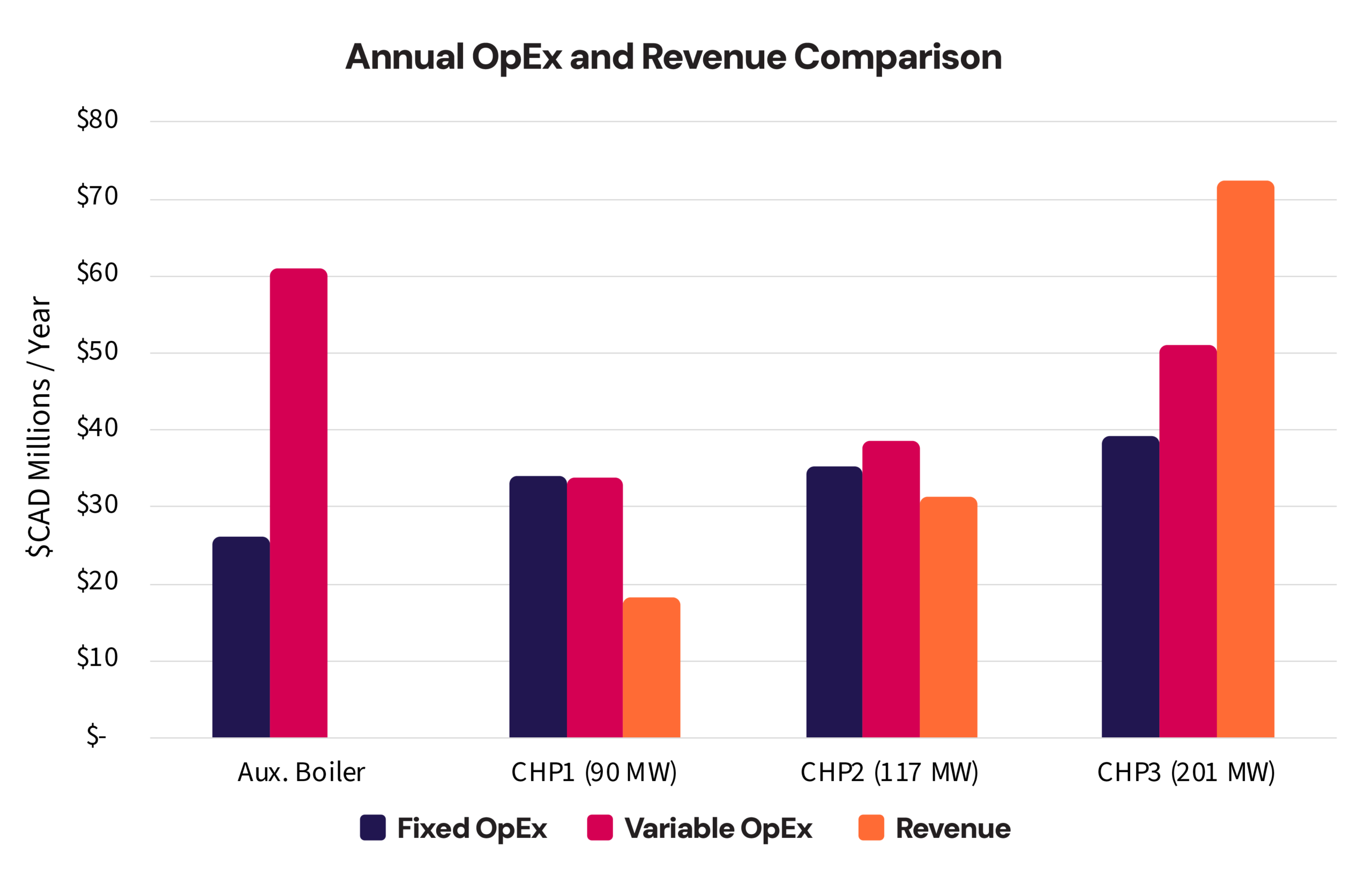
  • Variable OpEx comparison: The auxiliary boiler scenario has a higher variable OpEx because electricity for the capture plant must be purchased from the grid. In contrast, CHP plants supply the capture plant’s electricity, eliminating the need for grid-purchased power. Although the CHP systems burn more natural gas to produce this power, the cost of the additional fuel is lower than the cost of purchasing electricity in the auxiliary boiler scenario, resulting in overall lower variable OpEx for the CHP scenarios.
  • Variable OpEx increases with CHP plant size: As the size of CHP plant increases from CHP1 to CHP3, variable OpEx also increases. This is driven by the higher natural gas consumption required by the turbine to produce additional electricity in larger CHP units.
  • Revenue generation: CHP plants can generate more electricity than a capture plant requires. This excess power can be sold to the grid, generating a valuable revenue stream for the project. The larger the CHP unit, the more excess power is generated, resulting in a higher revenue for the project (i.e., The CHP3 plant configuration received $72 million per year in revenue from excess power sales).

Levelized Cost of Capture (LCOC) and Levelized Cost of CO2 Avoided (LCOA)

Key Insights:

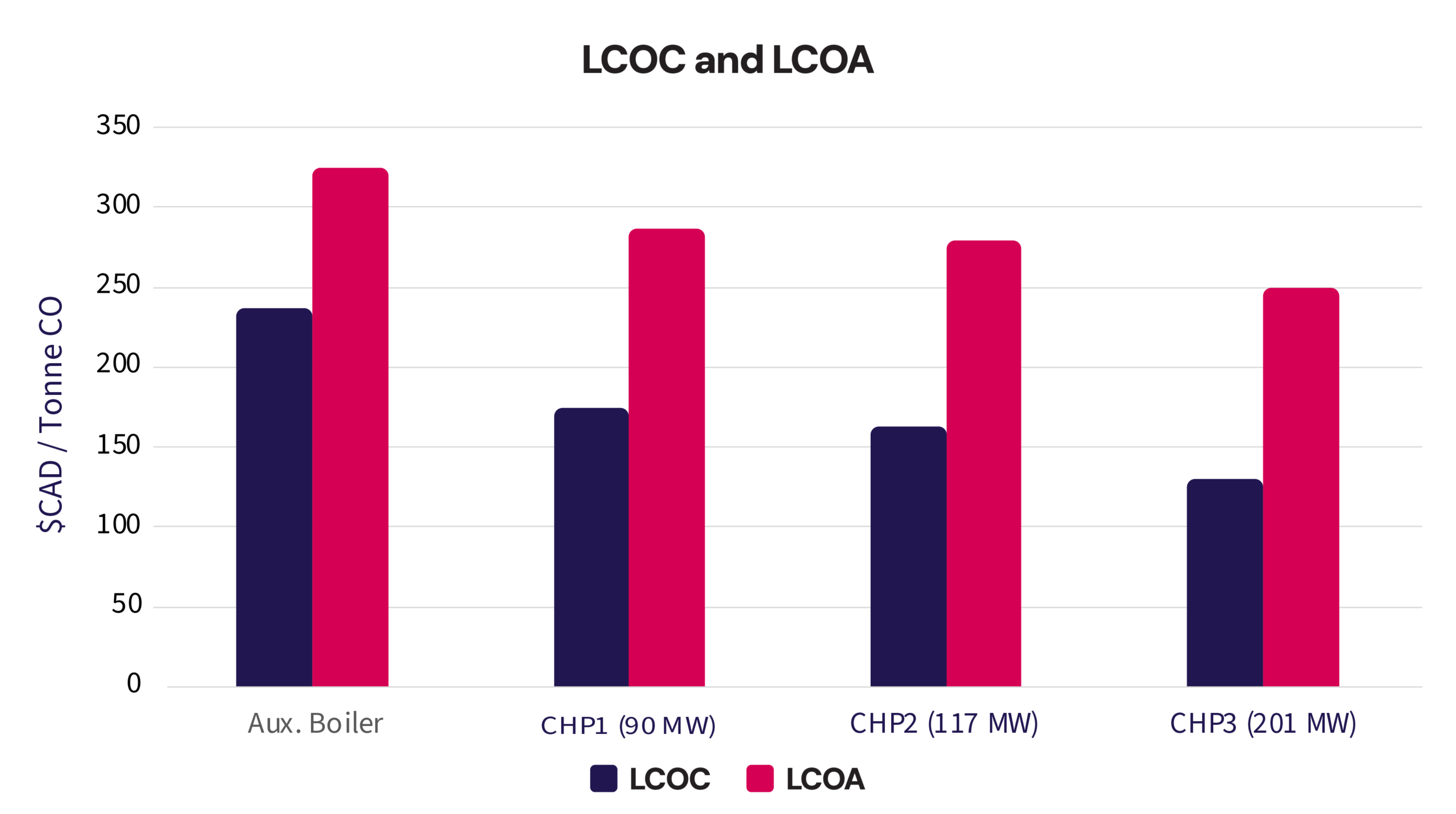
LCOC and LCOA improvements with CHP plants: CHP plants result in a lower LCOA and LCOC compared to the auxiliary boiler scenario. This is because CHP systems reduce operating costs by supplying the power required for the capture plant while also generating revenue by selling excess power to the grid. These benefits offset the higher capital investment and increased natural gas use associated with CHP systems, especially in low natural gas price environments like North America. This resulted in a 45% reduction in LCOC for the CHP3 plant compared to the auxiliary boiler scenario.

Power Price Sensitivity

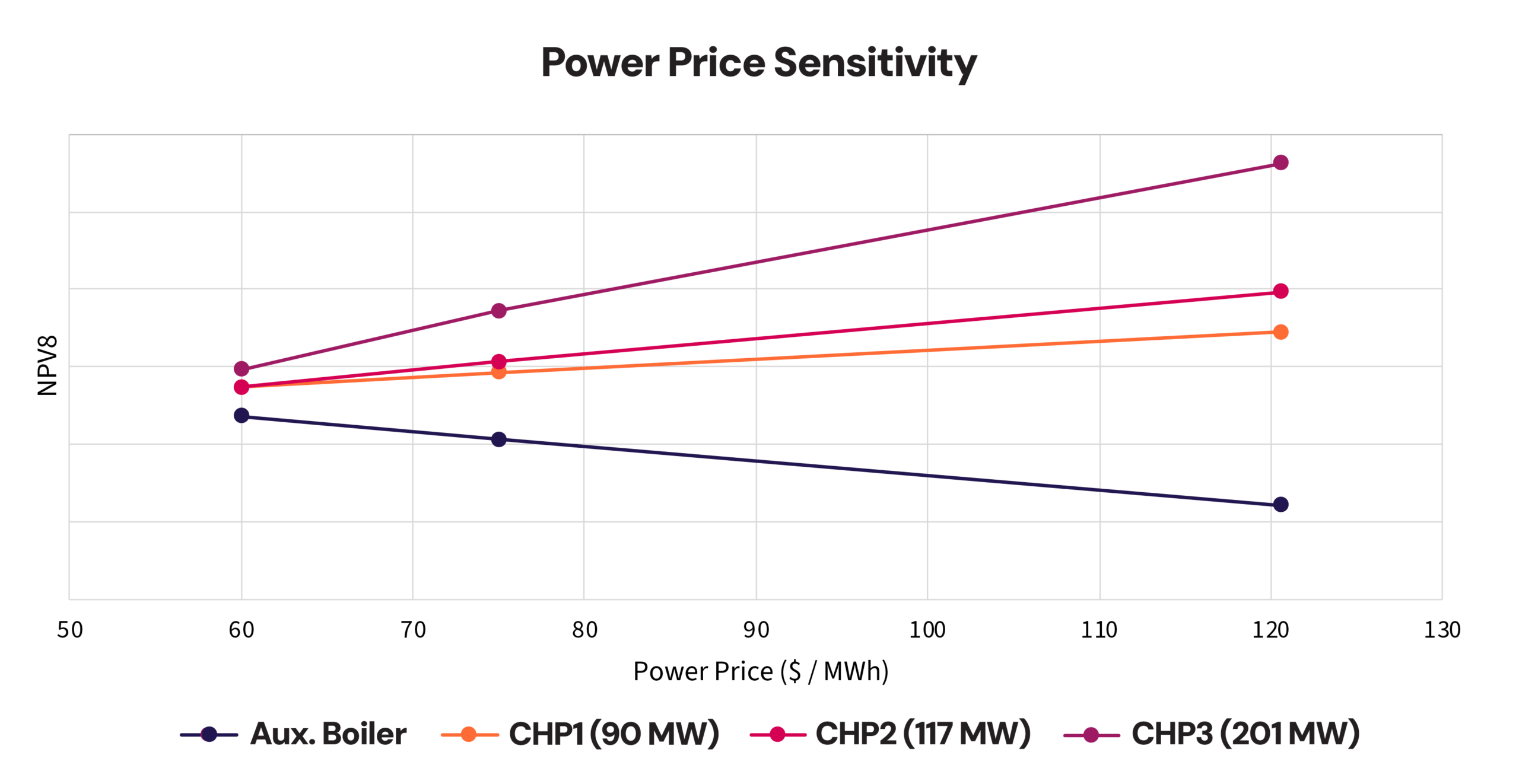
To understand the influence of power price on a project’s net present value (NPV), various power prices were tested on each scenario. Assumptions included a low power price of $60.0/MWh, a nominal price of $75.0/MWh and a high price of $120.6/MWh.

Key Insights:

  • As power prices increase, the auxiliary boiler’s NPV is negatively impacted. This is because all of the capture plant’s power demand must be purchased from the grid. Higher power prices result in higher OpEx costs, lowering the NPV of the project.
  • In contrast, the CHP plant scenarios see an NPV improvement from increased power prices, as they are able to generate more revenue by selling their excess power to the grid.
  • As the size of CHP plant increases from CHP1 to CHP3, more electricity is sold to the grid, resulting in a higher NPV. Larger CHP plants benefit the most from high power prices.

Natural Gas Price Sensitivity

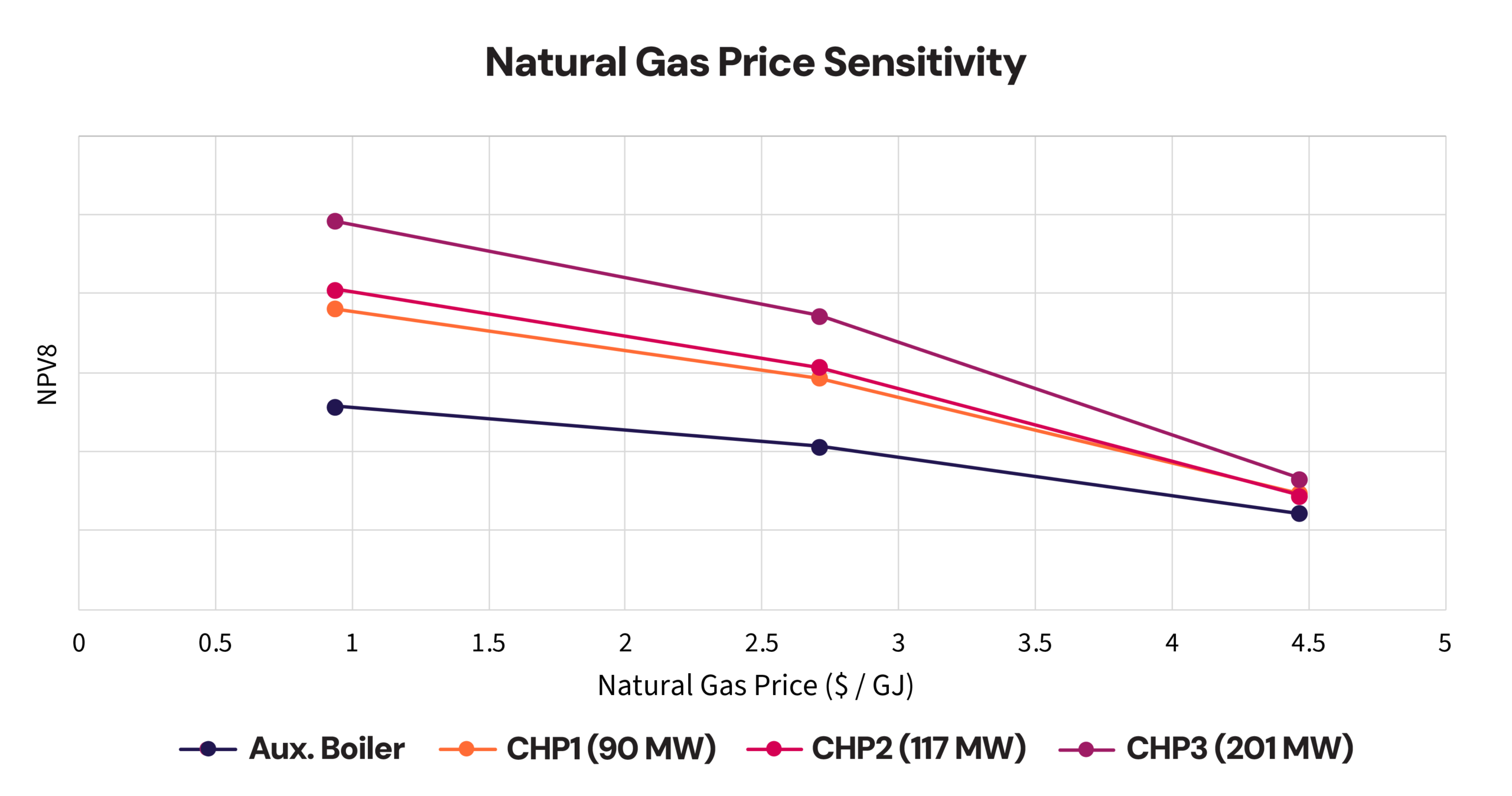
To understand the influence of natural gas price on a project’s net present value (NPV), various natural gas prices were tested on each scenario. Assumptions included a low price of $0.94/GJ, nominal price of $2.71/GJ and a high price of $4.47/GJ.

Key Insights:

  • As natural gas prices increase, both the auxiliary boiler and CHP plant scenarios’ NPVs are negatively impacted, as both systems rely on purchased natural gas.
  • The NPV of CHP plant scenarios are more sensitive to increases in natural gas prices than the auxiliary boiler scenario. This is because CHP plants use more natural gas to produce both steam and electricity. As natural gas prices rise, this higher fuel dependence results in a larger negative impact on project economics, with the larger CHP units showing a greater decline in NPV.
  • At high natural gas prices, the NPVs of the auxiliary boiler and CHP scenarios converge, as the higher natural gas costs diminish the economic advantage of CHP plants.

Conclusions

The main takeaways from this analysis are:

  • The auxiliary boiler scenario has the lowest upfront capital investment, but because electricity for the capture plant must be purchased from the grid, it faces higher variable operating expenses. These higher operating costs and lack of additional revenue streams from electricity sales lead to the highest LCOC and LCOA among the scenarios.
  • Although CHP plants require a higher initial capital investment, their ability to supply power to the capture plant and sell excess electricity to the grid reduces operating expenses and creates a valuable, additional revenue stream for the project. These benefits offset both the higher capital cost and the increased natural gas consumption associated with CHP systems, resulting in a 45% reduction in the LCOC from the auxiliary boiler scenario to CHP3 plant configuration.
  • Increased power prices negatively impact the NPV for the auxiliary boiler scenario, while CHP plants benefit from higher power prices due to increased revenue from electricity sales.
  • Both the auxiliary boiler and CHP plant scenarios see reductions in NPV when natural gas prices rise. However, the impact is greater for CHP plants due to their higher fuel consumption. At sufficiently high natural gas prices, the NPVs of the auxiliary boiler and CHP scenarios converge.
  • Higher natural gas consumption in CHP systems leads to lower overall CO2 emissions avoided relative to the auxiliary boiler scenario.

The CCUS Insight Accelerator (CCUSIA) is a partnership between the Government of Alberta and the International CCS Knowledge Centre to accelerate and de-risk CCUS by sharing knowledge and developing insights from projects.