| Image |
|
|
|
|
|
|
|
| Stage of Development
|
Operational with demonstrated on-going projects
|
Early Stages of Regulatory Development
|
Operational, with no large projects in operation
|
Regulatory Framework in development
|
Operational, with no large projects in operation
|
Regulatory Framework in development. Bill 17 is not yet adopted.
|
Operational with demonstrated on-going projects
|
| Pore Space Ownership
|
Crown
|
Crown
|
Crown
|
Crown, subsurface
|
Surface
|
Crown
|
Crown, mineral rights holders
|
| Pore Space Process Description
|
Alberta vested pore space in the Crown in 2011. However, Alberta has two pathways to secure pore space; one for small scale and remote (SSR) projects and another for large open-access carbon storage hubs.
Carbon storage hubs are issued in a multi-step process where first areas of requests for proposals are publicly issued for areas of the province. Successful bids are given rights to explore and evaluate pore space suitability for a given area. After evaluation and within a limited timeframe, projects then can apply for formal rights to use pore space for carbon sequestration.
The SSR process is primarily intended for smaller or remote projects that may not be addressed by the carbon sequestration hub approach, including projects with lower injection volumes or limited geographic scope. It requires coordination with mineral and surface rights holders. The SSR pathway also enables there conversion of acid gas injection wells for carbon sequestration.
|
Offshore pore space resources in Atlantic Canada are expected to be treated like offshore oil and gas resources with shared management between the federal and provincial governments.
|
British Columbia, as the Crown, has the right to explore, access, develop and use storage reservoirs for CO2 sequestration.
This does not apply to First Nations controlled lands.
To gain access to the storage reservoirs proponents must apply for a lease or license under the Petroleum and Natural Gas Act.
|
Pore space for CO2 sequestration is owned by the Government of Manitoba. Accessing pore space for carbon storage in Manitoba requires first obtaining an exploration reservation, and permits to the subsurface.
If the subsurface is suitable, the proponent must then secure required surface and subsurface rights from individual holders. If projects would adversely impact existing mineral rights holdings, a compensation procedure has been developed.
|
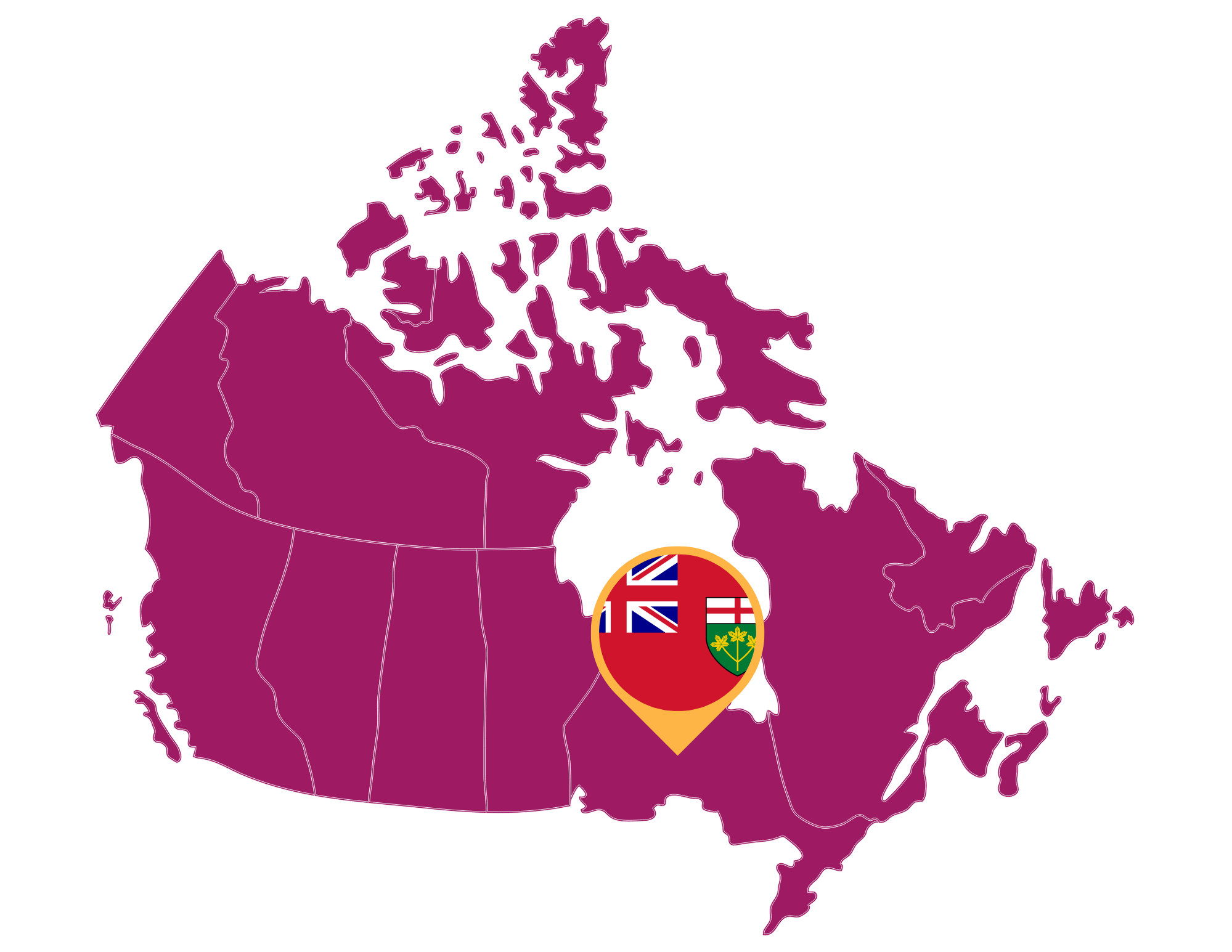
Ontario’s Geologic Carbon Storage Act, 2025 (GCSA) generally ties pore space with surface rights holders. Proponents are responsible for obtaining consent from rights holders for the use of their pore space. Rights to pore space can be unitized through an order issued by the Ontario Land Tribunal if a proponent secured more than 70% of pore space rights.
However, Ontario also has the ability to take rights to pore space from surface rights holders vest it in the Crown in certain circumstances. Rights to pore space may only be taken and vested in the Crown if the project is in the public interest, and the rights that would be taken are in relation to pore space that underlies both private and Crown-owned lands.
|
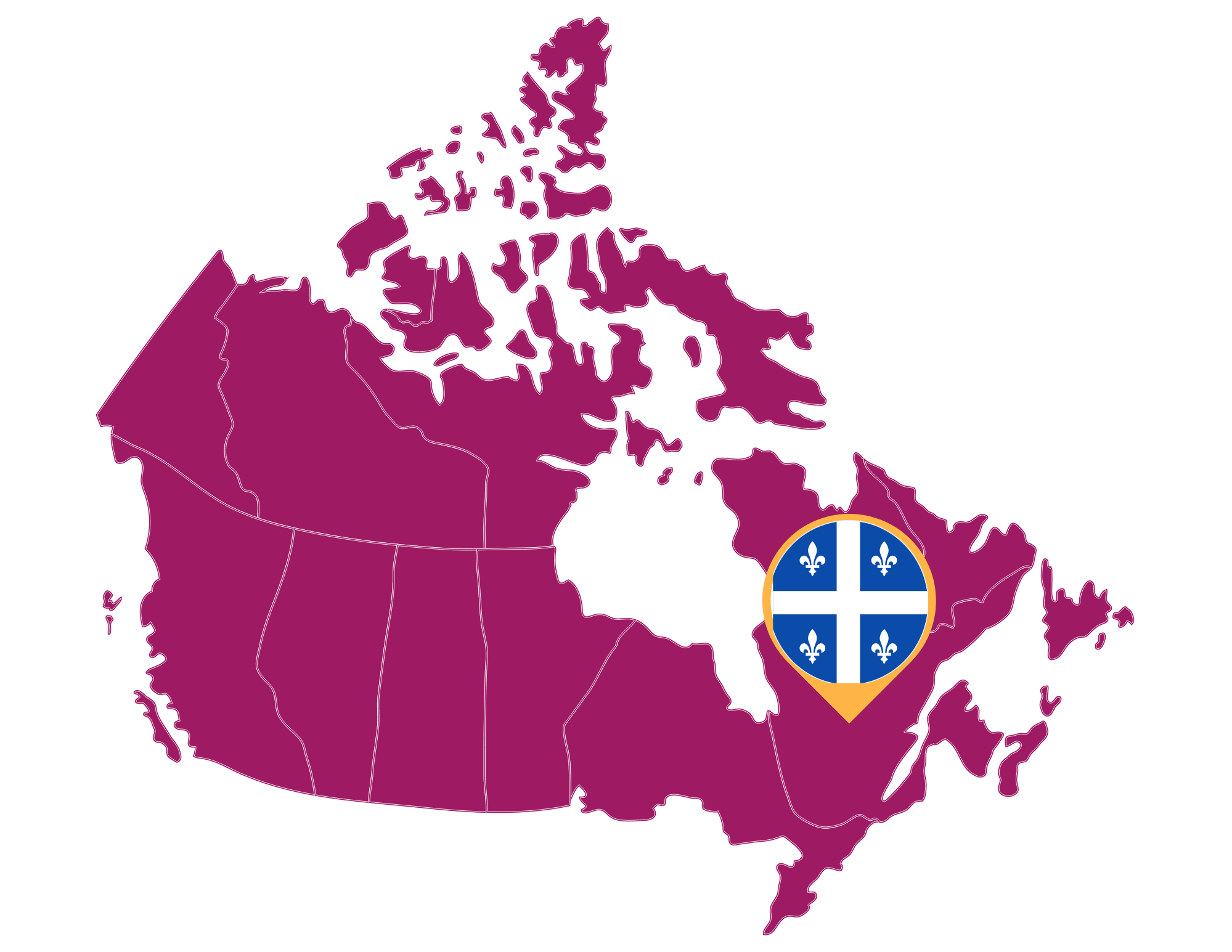
The proposed framework would deem underground reservoirs, including pore space as owned by the province across the entire province. Proponents would need to secure a license to operate or explore an underground reservoir.
The proposed approach would require coordination with existing mineral rights, holders and includes a dispute settlement if mineral rights holders and underground reservoir rights holders can’t enter into an operating agreement.
|
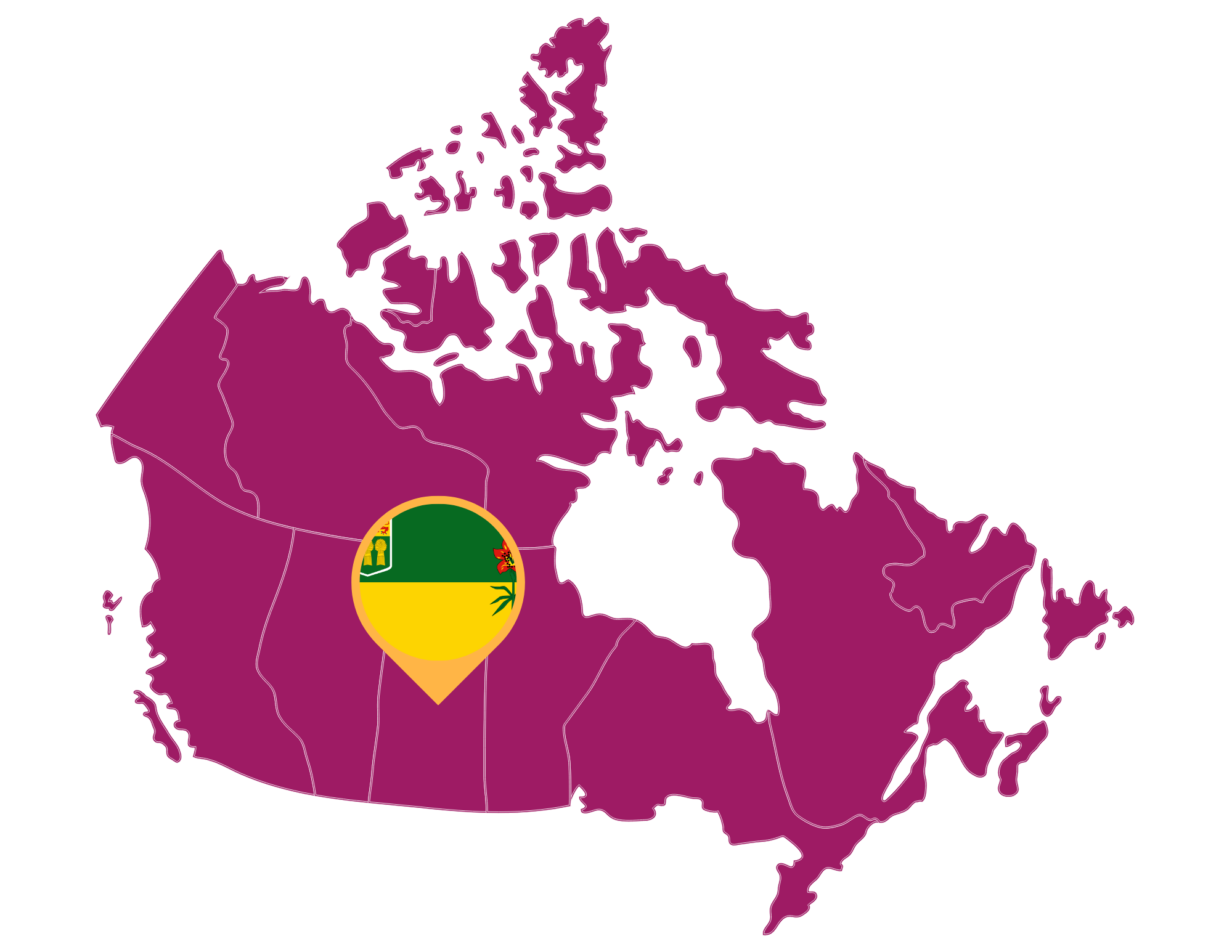
There is a mixed approach to pore space in Saskatchewan.
For areas of the province where the Crown owned mineral rights, presently or previously, pore space is vested in the crown. For areas of the province with freehold mineral rights, pore space is held by the rights holders.
To access pore space for CO2 injection, projects must apply for a crown Lease of Spaces. Saskatchewan also directs projects to garner consent from mineral rights holders that were previously crown-held and projects must negotiate and secure freehold mineral rights independently.
|
| Permitting Process
|
For both carbon storage hubs and small scale and remote projects, projects must apply for a series of licenses with the AER. The primary licenses are Directive 56: Energy Development Applications and Schedules (D56) and Directive 65: Resources Applications for Oil and Gas Reservoirs (D65). The permitting process includes well licenses, CO2 sequestration schemes, MMV plans and closure plans.
|
N/A
|
British Columbia’s process begins with a detailed subsurface evaluation to determine whether a proposed formation is suitable for long-term CO2 storage. Projects must apply for a lease and activity-specific permits with BCER, more specifically applications must be in accordance with Petroleum and Natural Gas Act (amended in 2022). The BCER evaluates applications for compression of CO2, pipelines, wells and other associated activities.
|
Manitoba’s permitting process is multi staged. Projects first go through an evaluation phase to apply for an exploration reservation. Once approved, projects apply for a carbon storage license and then begin construction and operation. Government of Manitoba evaluates all applications.
|
Ontario’s permitting process includes: research and evaluation permits for exploration purposes and storage permits for commercial CO2 storage activities. The permitting process is comprehensive from the well development down. Other key activities like CO2 pipeline transportation are not within the GCSA.
For research and evaluation or carbon storage activities proposed to occur on Crown-owned/controlled lands or public pore space, proponents must also obtain a license, which confers rights to perform those activities within the area specified.
|
Bill 17 establishes a license-based regime under which the Minister may award a license, subject to conditions set by regulation. There is then a separate work authorization process, requiring Ministerial approval, where prescribed by regulation. The process is indicated to include specific construction, injection, and site activities along with closure and financial security requirements. Several areas like well development and transportation may require amendments to other legislation.
|
Saskatchewan has a permitting process for disposal wells that has been adapted for CO2 sedimentary storage. These are primarily detailed in Directive PNG008: Disposal and Injection Well Requirements and the Carbon Dioxide Storage Project Application Form Guideline. Projects must demonstrate capacity for CO2 sedimentary storage, the ability of the geology to contain and confine the injected CO2, conduct risk assessments, and provide mitigations including measurement, monitoring and verification (MMV) plans. They must also have consent from mineral rights holders and conduct public notice in the area. Project approval allows proponents to apply for wells, facilities and pipelines. Proponents may be requied to conduct an Environmental Assessment approval from the Ministry of Environment.
|
| Evaluation Phase
|
Projects begin to collect data on the suitability for carbon storage of geological formations. This may include directive 56 applications and test wells. After evaluation, projects submit carbon sequestration scheme applications which includes closure, risk management, communication, and notification plans.
|
N/A
|
Projects must collect data to demonstrate suitable long-term carbon storage and no contamination of groundwater or other resource zones. This includes an application to obtain a Petroleum and Natural Gas Lease or a storage reservoir exploration license. Applications include risk assessments and an initial MMV plan. After approval, projects must apply for activity-specific permits needed to construct and operate injection wells.
|
Projects must obtain an exploration reservation, then secure the required geophysical exploration permit or test-well license to assess the subsurface. These activities must follow regulatory conditions and surface-access requirements to gather the data needed to confirm whether a suitable storage formation exists.
Specific technical standards, procedures, monitoring methods, reporting rules, and any emergency-response requirements will be defined in future regulations.
|
Proponents must obtain a research and evaluation permit to determine the suitability for commercial sedimentary CO2 storage. The application for the research and evaluation permit includes measurement, monitoring and verification (MMV) plans, emergency response, closure plans and third-party reviews. After submitting an application, projects must consult with local stakeholders prior to permit approval.
Pore space rights are required to be obtained by the proponent prior to the issuance of any permit.
|
The proposed framework would require an exploration license with specifics to be defined by regulation. Financial guarantees may be required by regulation.
|
Projects are responsible for conducting evaluation of storage containment, injectivity, capacity and characteristics as part of their PNG008 application and other related permits. Evaluation can be done before or after submitting the application for approval or obtaining the rights to inject. Preliminary evaluation can be done using regional data but site specific geology evaluation is required before injection. All baseline MMV work must be completed before injection.
|
| Sequestration Phase
|
Projects can begin sequestration after D65, relevant D56 and other licenses have been approved by the AER. Projects must update MMV and closure plans every three years during operation. Carbon Sequestration Agreement holders must make payments into the post-closure stewardship fund during operations.
|
N/A
|
During operations, projects must inject CO2 within approved pressure limits, follow the sanctioned MMV program, report injection and monitoring results, and manage risks in accordance with the lease conditions and the Regulator’s operational requirements. The Regulator maintains ongoing oversight and may require updates to the MMV plan or operational practices based on monitoring results.
|
In the sequestration phase, projects must obtain a carbon storage license, supported by approved risk management, MMV, and closure plans, and must have secured all required surface and subsurface rights. With the license in place, the proponent may drill and operate injection wells under well licenses and proceed with CO2 injection and long-term storage in accordance with the Act and license conditions.
|
After the evaluation phase, projects must apply for a storage permit which includes many of the same requirements as the research and evaluation permit.
Storage permits also require municipal endorsement and evidence of financial security for closure and long-term MMV of the site.
During operations, projects must maintain and update closure plans and demonstrate compliance throughout.
|
The proposed framework would require an operating license with specifics to be defined by regulation.
|
Projects must maintain a comprehensive and adaptive MMV plan as well as an emergency response plan throughout the life of the project. Projects must also ensure that they are compliant with all rules and regulations set by the province, including annual progress reports.
|
| Closure Post-Closure
|
Projects must apply for and receive approval for storage project closure. Projects must submit annual reports in the years following closure.
After demonstrating that the stored CO2 is stable and meets regulatory requirements, the operator can apply for a closure certificate.
|
N/A
|
Post-injection, BC requires the operator to enter a Regulator-mandated post-injection monitoring phase, established through a project amendment. This period requires continuing MMV activities. MMV obligations end once the defined monitoring period is completed, the storage wells are decommissioned, verifiably sealed, and the project obtains a Certificate of Restoration.
|
The Captured Carbon Storage Act requires projects to have and implement a closure plan and will provide a closure certificate once all conditions are met. Specifics related to MMV and other activities will be released as part of future regulations.
|
Projects in the closure period must decommission all wells, restore all lands, continue MMV activities, and show that stored CO2 is stable and presents little to no leakage risk.
After this period, if compliance is met, then the operator may apply for a closure certificate.
|
The proposed framework would require license holders to secure, close, rehabilitate, and restore sites in accordance with standards to be established by regulation.
|
Saskatchewan does not currently have specific CO2 sedimentary storage closure or post-closure regulations.
|
| Long Term Liability
|
Upon issuance of the closure certificate for carbon storage hubs, Alberta will take on MMV responsibilities and long-term liabilities. Both carbon storage hubs and SSR projects are relieved of credit true-up obligations after the closure certificate is granted.
|
N/A
|
BC follows the traditional oil and gas closure model and does not provide a pathway to transfer long-term liabilities to the Crown nor does it have a pathway to release CO2 credits collected by the province and placed into a project contingency account.
|
Under the current framework, the holder of the carbon storage license remains liable for all necessary post-closure actions, repairs, and restoration work related to the storage project. Manitoba does not have a path for the release or assumption by the government.
|
Once the closure certificate is issued, all obligations and ownership of the wells, storage site and related works are transferred to the government, as well as anything else in the regulations.
|
Once closure obligations are satisfied Quebec would assume monitoring of the site. Detailed requirements related to MMV, financial guarantees, and closure confirmation will be set out in future regulations.
|
Saskatchewan has no process currently in place to transfer MMV responsibilities for long-term liability to the province. After receiving an Acknowledgement of Reclamation Certification, the last licensed operator remains liable for the site in perpetuity.
|
| Designated Jurisdiction Status
|
Yes
|
No
|
Yes
|
Manitoba is currently working with Environment and climate Change Canada (ECCC) to obtain designation.
|
Ontario is currently working with Environment and Climate Change Canada (ECCC) to obtain designation.
|
No
|
Yes
|
| CO2 Enhanced Oil Recovery (EOR)
|
Alberta has a complete regulatory framework for CO2 EOR storage. Similar to dedicated geological storage, CO2 EOR applications are managed by the AER and include comprehensive MMV, closure plans etc.
CO2 EOR storage projects require mineral rights for the project scheme area, for the extraction of oil prior to permitting.
|
N/A
|
N/A
|
N/A
|
N/A
|
Petroleum production is prohibited by the Act ending exploration for petroleum and underground reservoirs and production of petroleum and brine.
|
Saskatchewan has a complete regulatory framework for CO2 EOR storage. Similar to dedicated geological storage, CO2 EOR applications are managed by the MER.
CO2 EOR storage projects require mineral rights for the project scheme area, for the extraction of oil prior to permitting.
|
| Compliance Offset Carbon Credits for CCUS – Pathways
|
Provincial industrial carbon offset credits, Federal clean fuel regulations
Quantification protocol for carbon dioxide capture and permanent geologic sequestration
|
N/A
|
Provincial industrial carbon offset credits, provincial clean fuel standards
|
Federal industrial carbon market surplus credits, Federal clean fuel regulations (once CCS regulations fully developed)
|
Provincial industrial carbon pricing system, Federal clean fuel regulations
|
There is currently no protocol in place to generate offset credits, and Quebec is not yet an eligible jurisdiction for geologic storage and so is not eligible for clean fuel regulations
|
Provincial industrial carbon offset credits, Federal clean fuel regulations
|
| Compliance Offset Carbon Credits for CCUS – Types of Storage in Pathways to Credits
|
Sedimentary Storage, CO2 EOR
|
N/A
|
Sedimentary Storage, Mineralization
|
N/A
|
N/A
|
N/A
|
Sedimentary Storage, CO2 EOR
|